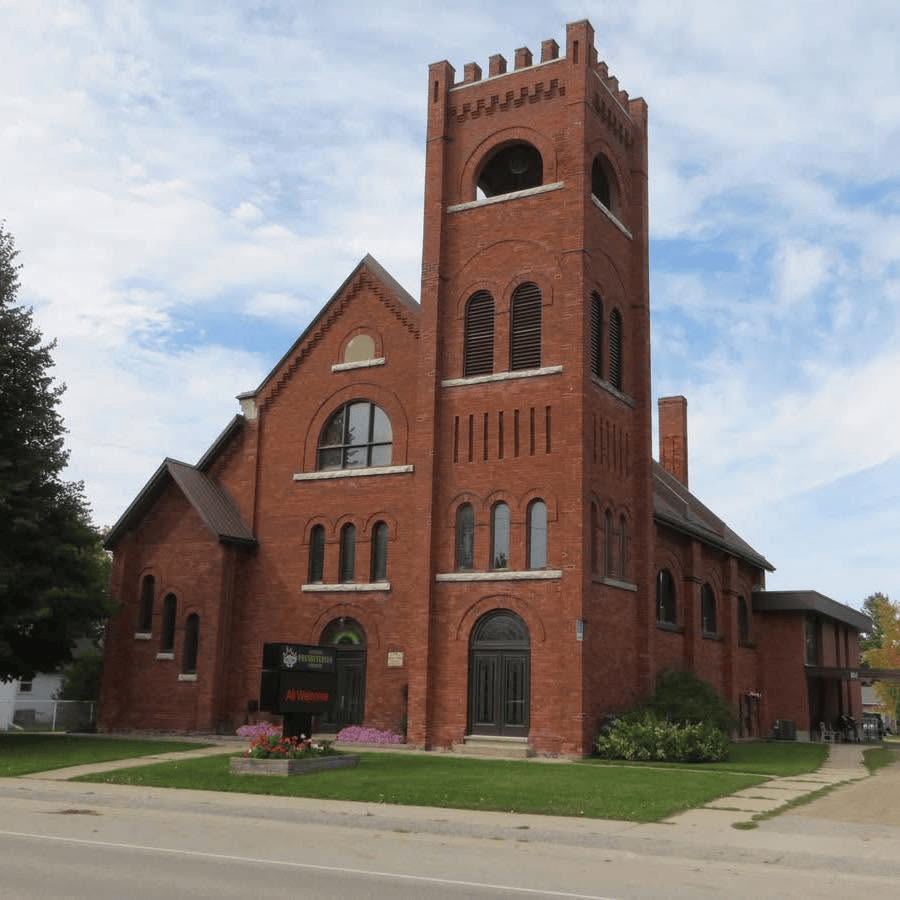
It was a relaxing Saturday evening. Normally I would be fine tuning my sermon before preaching it at the Three Churches the next day. But this week it was a Sunday off. My wife asked where would I like to go to church tomorrow. The ritual usually goes like this. I would then ask Lynne where would she like to go. And she would reply, “I’m asking you”. It had been a couple of months since we have been to Elmvale Presbyterian Church. So I suggested “Let’s go there”. Reverend Tom Mason of the Elmvale Church has been such an encouragement to me following the closure of St. Andrews Presbyterian Church, Hillsdale in 2022. I appreciate him so much. It was also World Communion Sunday, which is held the first Sunday of October each year. It would be neat to not only join the congregation at Elmvale in taking part in their communion service there, but also knowing on a global scale I would be joining millions of other Christians across thousands of churches worldwide.
In my research for this article, it was interesting to learn the World Communion Sunday (originally called World Wide Communion Sunday) originated in the Presbyterian Church (U.S.A.). In 1936, for the first time, the first Sunday in October was celebrated in Presbyterian churches in the United States and overseas. From the beginning, it was planned so that other
denominations could make use of it, and after a few years, the idea did spread beyond the Presbyterian Church. An article from Catonsville Presbyterian Church gives more insight.” It was 1940 during World War 2 when the Spirit caught hold. During wars people think more of their own mortality and how to hold the world together. It was then the other denominations began to also celebrate World Wide Communion Sunday. World Wide Communion Sunday symbolized the effort to hold things together in a spiritual sense. It emphasized that we are one in the Spirit and the Gospel of Jesus Christ.”
It is now 2026. Our world is increasingly destabilized by global market economies based on greed. A website I sometimes use for reference for what is happening in the world is World Death Data. Mainstream media often does not show the real full picture. It gives more details on the 10 major armed world conflicts happening right now. In these conflicts, there has been 626,000 people losing their lives, 40+ million displaced from their homes and 40 counties directly or indirectly affected. In 2025 the Global military spending was 2.9 trillion dollars. The only answer for lasting peace is Jesus, the Prince of Peace.
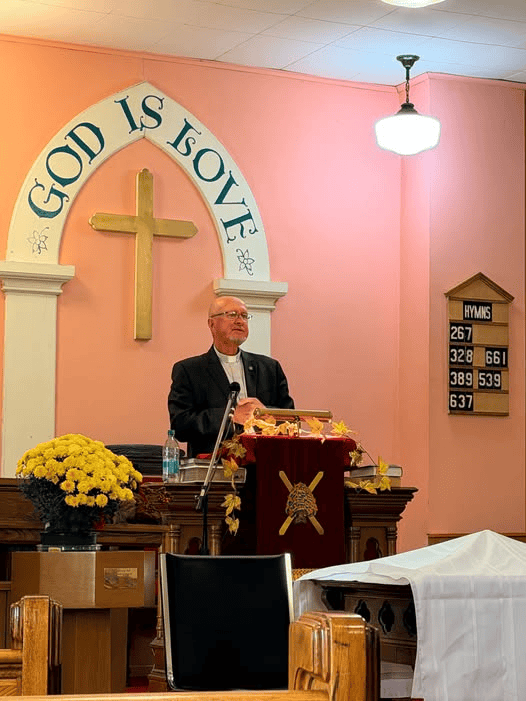
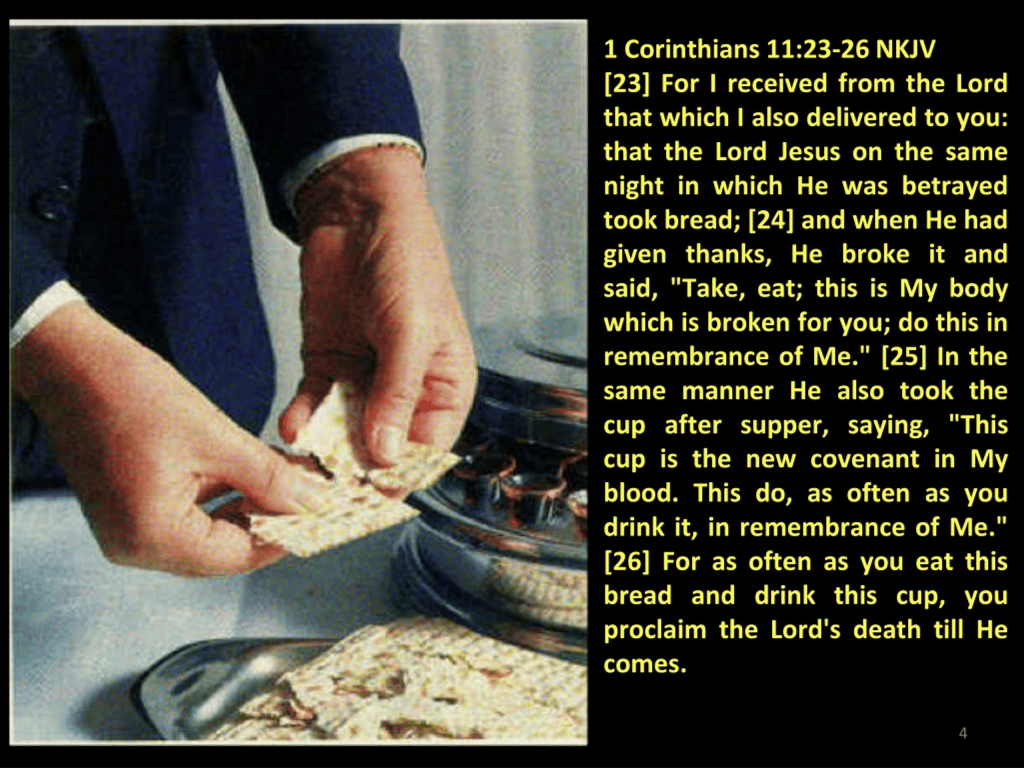
On World Community Sunday, in humility we come to the Table of the Lord empty handed. There is nothing we bring to this meal. It is not a potluck. We come with empty hands. To the non-Christian, it might be hard to grasp the significance of the Communion Table. The broken piece of bread eaten represents the broken body of Jesus on the cross. There is also a little cup of juice or wine. It represents the Blood of Jesus shed on the cross. Jesus Christ was God in human flesh. He gave His life for this broken world.
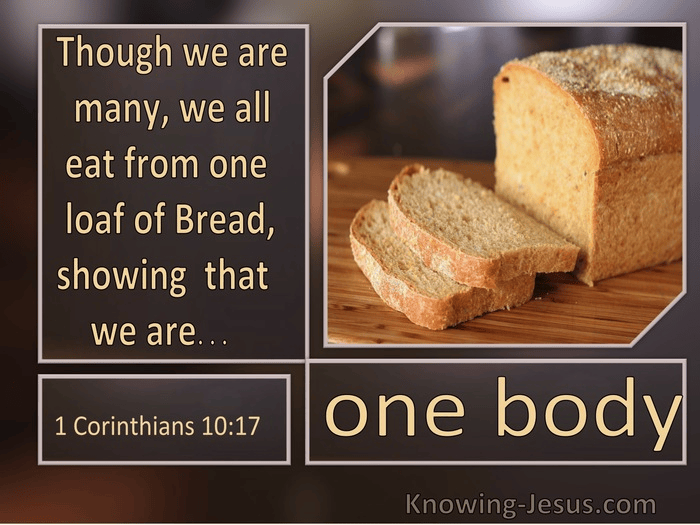
Physically speaking, the bread and wine can be symbolic of the nourishment of our physical bodies. Here in Canada we have Canadian Thanksgiving this coming weekend. God provides our food in abundance. But spiritually it goes far deeper. As we respond in confession, repentance, and humbling ourselves before a gracious and mighty God, Christ becomes our sufficiency and our spiritual sustenance. When Christ becomes our sustenance there is no place for hatred, greed and corruption, which is so prevalent in the world today. Church denominations sadly over the centuries were formed through divisions. On World Communion Sunday we share the Table of the Lord in unity. The World Council of Churches, founded in Amsterdam in 1948 is a fellowship of 356 member churches in more than 120 countries and territories throughout the world, representing over 580 million Christians worldwide. It works for Christian unity and justice. Though we come from different cultures, countries, traditions, and circumstances, we gather around one bread and one cup as one body. On World Communion Sunday the table becomes a place where divisions give way to connection, where diversity is celebrated, and where the global church is united in Christ.
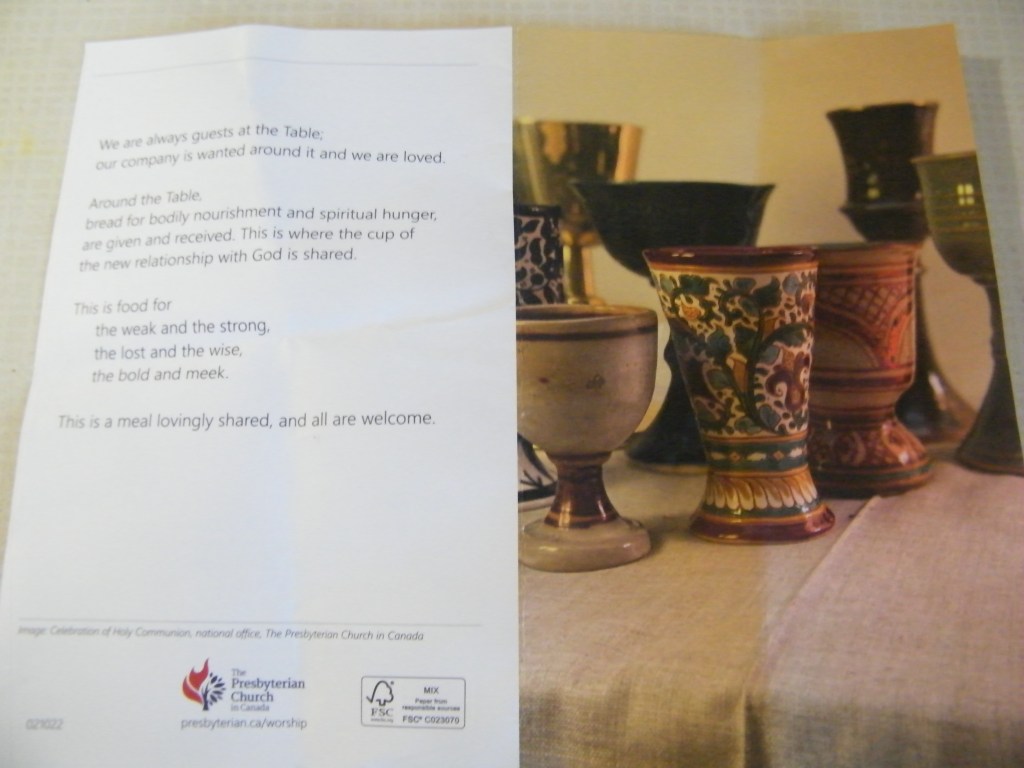
One final thought, when my wife asked me “where would we like to attend church tomorrow”, we could have easily streamed a church service. Occasionally we will worship online with my wife Lynne’s parents (now both passed away) home church at Mahurangi Hope Presbyterian Church in Warkworth, New Zealand. Obviously distance prevents us from being there in person. As good as web streams, church on TV or podcasts may be (though for some this is the only option), there is no substitute for gathering with the people of God around the Table of the Lord. You break the bread and take the cup when you gather with other believers. Sharing together the bread and the wine can become an occasion for the grace of God to break through into our lives. At the table we reflect on the brokenness of the world, the suffering of our Savior, the forgiveness of our sins and the wholeness that comes into our lives because of Jesus Christ. It is much harder to get that on a podcast or a Webstream or a TV channel. Psalm 122:1 says, “I was glad when they said unto me, Let us go into the house of the Lord.”
Disclaimer: All written content is my own original creative, expressive content with no Artificial Intelligence (AI) assistance. Doing what I can in my little corner to not support this technology oligarchy, data centers and environmental destruction. Credits through links added given to the sources used in the article through my research and of any excerpts used in the article. As well, credit given to any images that are not my own. Thank you…Carl.


