The end of April each year can best be described as a high and a low for myself. On a high note, the last Saturday my favorite trail race is held, the 50k Pick Your Poison. On a low note, income tax filing is due at the end of each April. It is something I dread each year, so I always end up putting it off until the very last day. It is really hard to determine which countries pay the most taxes, because taxes come in so many forms. In Canada we have personal income tax, corporate tax, Goods and Services Tax (GST), excise tax, property tax, custom duties and tariffs, health services tax and capital gains tax. That’s quite a list, and I am sure I might have even missed some forms of taxation.

Taxes can be an incredible financial burden, but they are used to fund all kinds of publicly funded services. Things often taken for granted here in Canada such as our schools and health care. Taxes fund police and fire departments, our military, as well as roads and parks. Even my wages as school crossing guard come from people paying their taxes. Next month I’ll be turning 65 and soon after I’ll be eligible for what is called Old Age Security. An income I will receive each month for as long as I live.

According to the Canadian Encyclopedia, the “first recorded tax in Canada appears to date back to 1650. An export tax of 50% was levied on the residents of New France on all beaver pelts and 10% on all moose hides.” The force of revenue through taxation has been a part of all governments and peoples going back to the earliest of civilizations. In Jesus’s time, people complained about paying taxes as well. The Roman Empire, which had conquered Israel imposed a heavy financial burden to pay for its army, a good road system, public buildings, markets, stadiums, baths, theaters, temples to the Roman gods, and for the emperor’s personal wealth. Revenue for all of Rome’s glory had to come from somewhere. But the provinces were almost bled to death with high taxation in the process.
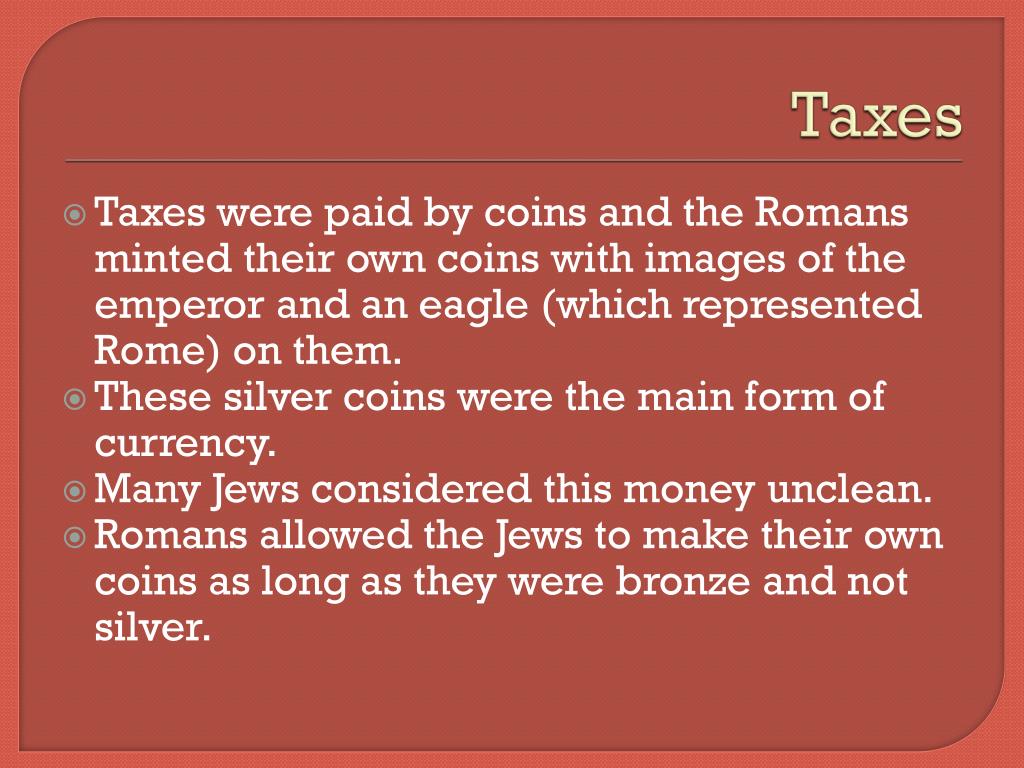
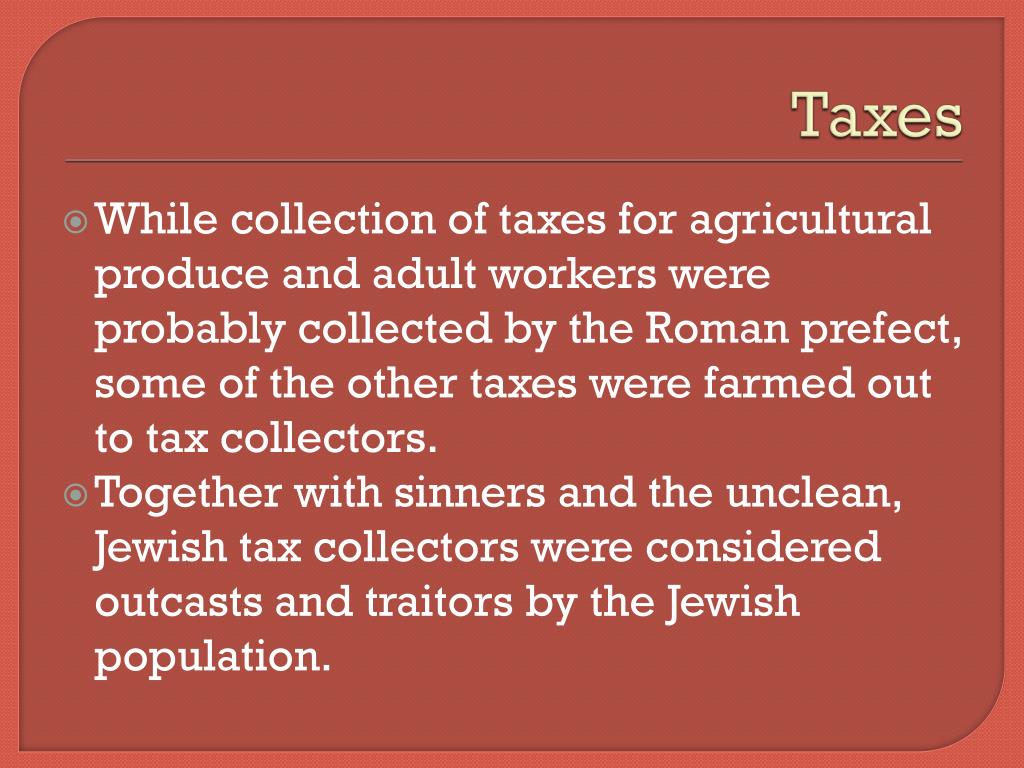
The Encyclopedia of the Bible provides great insight of what the taxation system was like during the time of Jesus. In order for the Romans to collect revenue the cheapest way possible, tax franchises were sold to highest bidders. The government set the quota and gave the tax franchise collector the right to collect at an open-ended commission. Contracts were let for five-year periods. There were massive abuses, and through those unregulated commissions, tax collectors became extremely wealthy.
We’ve covered the taxes part and we’ll look at the “more” part. Jesus offers more. In Matthew 9:16 it reads, “As Jesus went on from there, he saw a man named Matthew sitting at the tax collector booth. “Follow me” he told him, and Matthew got up and followed him.” This was so incredible. There was never a more unlikely candidate for disciple than Matthew. For Matthew, he lost a high paying job for honour. He lost security , but found an adventure of which he would never have dreamed.
What follows is that Jesus is dining at Matthew’s house and Matthew has many of his tax collector friends join him. We don’t know if it was a work farewell party, much like the party I was given when I left my warehouse job to become crossing guard. Or it could be Matthew just wanted to introduce his work colleagues to Jesus. Or perhaps Jesus told Matthew to host the dinner party. When we eat with someone it means that we accept them. Jesus eating with tax collectors and sinners was offering a new type of message. A message of love. A message of acceptance. A message of forgiveness. A message with the idea that God loves them right where they are.

This is a radical shift in the way people would be thinking. Especially for the Pharisees. Pharisees had no use for tax collectors and sinners. But here is Jesus eating with them. Their response was something like this, “What is wrong with this guy. He is supposed to be the respected Jew. He is supposed to be the respected teacher. Yet here he is eating with tax collectors and sinners.” Jesus’s response as written in the New Living Translation is quite amazing. It reads, “Healthy people don’t need a doctor. Sick people do. I have come to call not those who think they are righteous, but those who know they are sinners.” The Pharisees really thought they were righteous. They did. They had this idea they were living the right life because they were able to check off all those performance standards. Jesus was really saying, “I have nothing to offer you. You already think you have your act together.”
Speaking for myself, I fall into this performance based mentality way too much. If I read my Bible each day, pray each day, help others and even work hard to put together to what I feel might be a decent sermon, God is going to love me. But what if I don’t do that? What if I don’t crack open my Bible all week, have no prayer life, and don’t do anything but self serving stuff all week. Does that mean God doesn’t love me anymore? Do you ever think that? And our Christian lives lack joy because each day we wonder if God really loves us or doesn’t love us based on our performance.
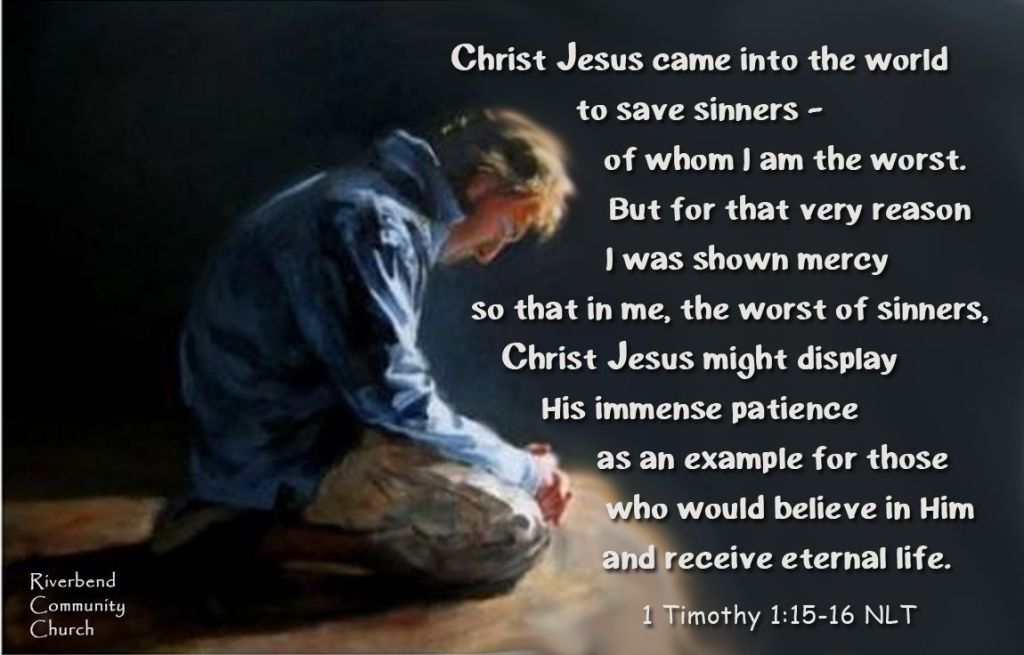
First and foremost we have to realize we are all sinners. Everyday I mess up so badly. So everyday should be an act of repentance because everyday I do something outside of Holy living in thought word or deed. Because of his past life, Paul describes himself as “the worst of sinners”, yet through the power of Christ he became one of the greatest Christians of all time. In 1 Timothy 1:15, Paul writes, “Here is a trustworthy saying that deserves full acceptance. Christ Jesus came into the world to save sinners of whom I am worst.” It is a message we have to accept. We are sinners. Yes, we are saved. But we are still sinners. Everyday we mess up. Accept that. But also accept that God does not love you based on your performance. God loves you simply because you are His creation. You are a child of God. God loves us so much that He sent His Jesus to earth to die to pay the price for my sins. “For God so loved the world that he gave his one and only Son, that whoever believes in him shall not perish but have eternal life.”
Article based on a sermon I preached at the Three Churches on June 11, 2023…Carl Wright.


 My Sunday Blog
Pingback: Sodium and Chloride | My Sunday Blog