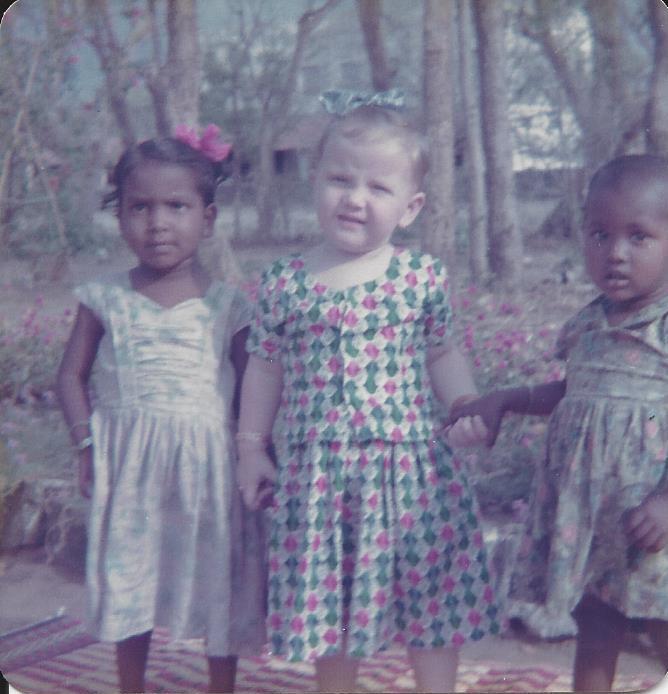
Leprosy or otherwise known as Hansen’s Disease is quite rare here in Canada. The World Health Organization has it listed as a tropical disease. My wife Lynne was born in India as a MK (missionary kid) and lived there until she was 9. Even a half century later she has memories of people in India who had this dreaded disease. Modern medicine has made great strides towards eradicating it. In the 1980s, there were 5.2 million cases globally, but by 2020 this decreased to fewer than 200,000. Most new cases occur in 14 countries, with India accounting for more than half. About 200 cases per year are reported in the United States, with the hot and humid state Florida being the hotbed. Multi Drug Therapy (a combination of three different antibiotics) is the only cure for leprosy and it is available free of charge across the world through the World Health Organization (WHO).
World Leprosy Day (WLD) is celebrated worldwide on the last Sunday of January every year. The only exception is India, where it is always held on January 30th, the anniversary of Mahatma Gandhi’s death. It was established by French journalist Raoul Follereau in 1954 to campaign for those affected by the disease. The theme for 2024 is “Beat Leprosy”. Quoted from WHO (World Health Organization), “This theme encapsulates the dual objectives of the day: to eradicate the stigma associated with leprosy and to promote the dignity of people affected by the disease. The theme of “Beat Leprosy” serves as a powerful reminder of the need to address the social and psychological aspects of leprosy, alongside the medical efforts to eliminate the disease. It calls for a world where leprosy is no longer a source of stigma but rather an opportunity to demonstrate compassion and respect for all individuals.”

I have supported The Leprosy Mission for many years. They mention that “Leprosy is a mildly infectious disease. It is spread by a bacteria called M.leprae and most people are not at risk of developing leprosy if they are exposed to this bacteria”. When Jesus was on earth there was no cure for leprosy. And being diagnosed with leprosy was a death sentence, physically, socially, economically, and spiritually. In fact, rabbinic tradition, as Chuck Swindoll explains, “held that curing leprosy was as difficult as raising the dead, perhaps because they saw the disease as the physical manifestation of sin’s consequences.” A leper was considered physically unclean, contagious, as well as spiritually unclean. That meant a leper was completely shunned from normal activities of community life and banned from inclusion in worship in the temple or any synagogue. The leper couldn’t hold a job, couldn’t live in a home with non-lepers (including his or her own family), couldn’t shop in a market, couldn’t own property, couldn’t touch or hug or hold hands. Nothing. The leper’s only option was begging for scraps, isolation, and waiting to physically deteriorate and die.

Depending on the Bible version being used, the word leprosy is mentioned upwards of 40 times in the Bible. In Mark 1:40-42 it reads, “A man with leprosy came and knelt in front of Jesus, begging to be healed. “If you are willing, you can heal me and make me clean,” he said. Moved with compassion, Jesus reached out and touched him. “I am willing,” he said. “Be healed!” Instantly the leprosy disappeared, and the man was healed.” Jesus reached out and literally touched the man society had rejected as untouchable. Such compassion.

In its early stages, symptoms of leprosy can be as simple as a running nose, pain in the joints and a feeling of fatigue. But as the disease progresses, it will attack the nerve endings in a persons nervous systems. So that touch sensors and pain sensors no longer work like they should. A person with leprosy might step on a thorn or nail and feel nothing. When it becomes infected they still feel nothing. Or the person with leprosy might wash their face in scalding water. The person with leprosy would not have felt it. That scalding water could cause scarring on the face which could even cause that person to go blind. Going back to the man with leprosy that Jesus healed, I can’t even imagine what it would have felt like to feel the touch of Jesus. After not feeling anything for so long. And it was in that touch that Jesus showed the man how much He as the Son of God loved him.
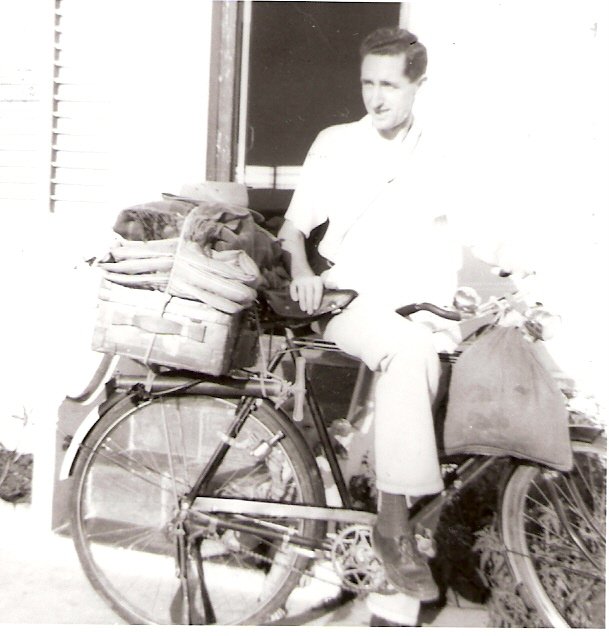
We really owe a lot to the Christian Missionary doctors whose work and research greatly improved the lives of those who suffer with leprosy today. They have been the hands and feet of Jesus, while going to places and ministering with people who no one else dared. One of those missionary doctors, (in which my wife’s mom and dad had some connections with in the Tamil Nadu region of India) was Dr. Paul Brand. Dr. Brand pioneered the idea that the loss of fingers and toes in leprosy was due entirely to infection and was thus preventable. Because leprosy attacks chiefly the nervous system, resultant tissue abuse occurs because the patient loses the warnings of pain. Not because of inherent decay brought on by the disease. In the late 1940s, he became the first surgeon in the world to use reconstructive surgery to correct the deformities of leprosy in the hands and feet. Dr Margaret Brand (Paul Brand’s wife) devoted herself to researching methods to prevent blindness in persons with leprosy. Mr. and Mrs. Brand served many years with The Leprosy Mission. In retirement back in the United States, Dr Brand continued to contribute to leprosy work through his advisory role to The Leprosy Mission and to the World Health Organization. After a lifetime of service Dr. Paul Brand passed from this earth on July 8, 2003. He was 89. His wife Margaret passed away on November 17, 2014. She was 95.

On World Leprosy Day, “It calls for a world where leprosy is no longer a source of stigma but rather an opportunity to demonstrate compassion and respect for all individuals.” We live in a world that desperately needs the compassion of Christ. May we be those hands and feet that would touch the lives of others. Each and every day.
Written as a sermon preview for a sermon titled “The Power of Touch” on World Leprosy Day January 28, 2024 at The Three Churches I minister at…Carl Wright


 My Sunday Blog